Ergonomics and Technology Transfer: Toward a Human-Centered Approach to Industrial Equipment Implementation
Article Sidebar
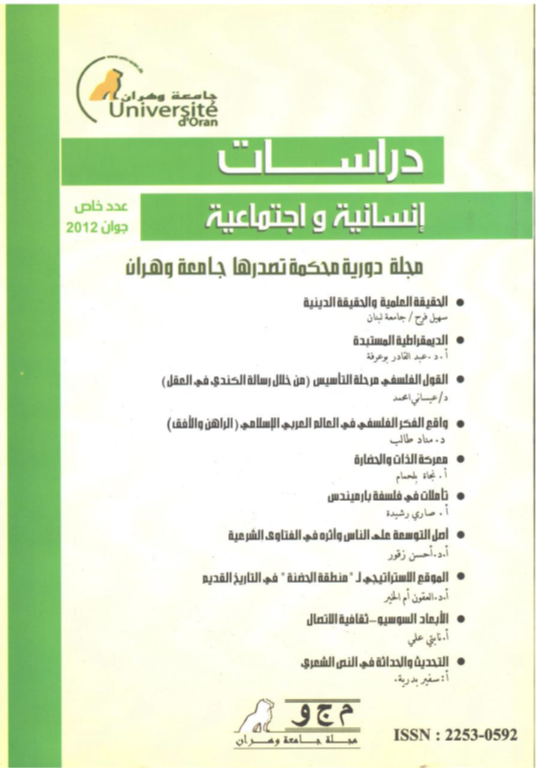
Main Article Content
Abstract
This study examines the role of ergonomics in improving technology transfer processes within industrializing developing countries. Using an analytical approach supported by field observations conducted in thirty industrial enterprises from different productive sectors, the paper investigates the causes of degraded operating conditions affecting imported industrial equipment. The analysis identifies a dual obstacle to successful technology transfer: the limited transmission of technological knowledge by exporting firms and the organizational, technical, and environmental constraints encountered by recipient enterprises during implementation. Particular attention is devoted to deficiencies in operator training, inadequate workplace organization, unsuitable installation environments, unreliable maintenance systems, and incomplete technical documentation, all of which reduce equipment performance and increase operators' physical and cognitive workload. The study argues that conventional technology transfer models often neglect human, organizational, and ergonomic dimensions by focusing primarily on technical and commercial aspects. It further demonstrates that integrating ergonomic expertise throughout the acquisition process—from drafting technical specifications and evaluating working conditions to designing training programs, maintenance strategies, and organizational structures—enhances technological adaptation, operational reliability, worker safety, and organizational performance. The paper concludes that effective technology transfer requires a comprehensive human-centered strategy in which ergonomics serves as a fundamental component of technological integration rather than a corrective intervention after implementation. Such an approach contributes to sustainable industrial development by reconciling technological innovation with the capabilities, constraints, and needs of both workers and organizations.
Article Details

Copyright Notice
Authors retain copyright and grant the journal right of first publication with the work simultaneously licensed under a Creative Commons Attribution 4.0 International License (CC BY 4.0).
This allows others to share the work with an acknowledgement of the work's authorship and initial publication in this journal[cite: 2, 11].
The journal allows authors to deposit the Version of Record (published version) in an institutional or other repository of their choice without any embargo period.
References
Bendiabdellah, A., & Chellil, A. (2003). La réalité de la formation dans l'entreprise algérienne. Proceedings of the International Conference, Tlemcen.
Dahmani, A. M. (1985). L'Engineering dans la maîtrise industrielle et technologique. Alger: Office des Publications Universitaires.
Hendrickx, C. (1996). Le transfert de technologie et l'apprentissage organisationnel.
Lasserre, P. (1981). Le transfert international de technologie. Paris.
Montmollin, M. de. (1997). L'Ergonomie. Paris: La Découverte.
Rubio, C. (1990). Transfert de technologie et rétention du savoir.
Wisner, A. (1997). Anthropotechnologie: Vers un monde industriel pluricentrique. Toulouse: Octarès Éditions.
Wittorski, R. (1998). La professionnalisation. Paris: L'Harmattan.
International Labour Office (ILO). (1988). Safety and Health in Technology Transfer. Geneva: International Labour Office.