The Principle of Facilitation in Islamic Law and Its Impact on Juristic Fatwas
Article Sidebar
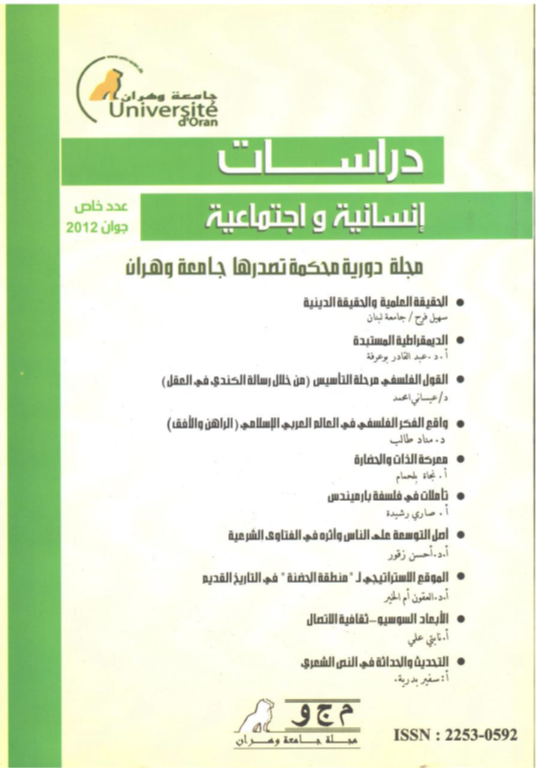
Main Article Content
Abstract
This study examines the principle of facilitation (taysīr) as a fundamental objective of Islamic law and analyzes its implications for contemporary juristic fatwas. Adopting an analytical and doctrinal methodology, the paper argues that the original rule in Islamic legislation is the removal of hardship and the promotion of ease, as consistently affirmed by the Qur'an and the Prophetic Sunnah. Through a systematic examination of Qur'anic verses, Prophetic traditions, and juristic reasoning, the study demonstrates that legal rulings should remain faithful to this foundational principle and adapt to changing social realities without compromising the essential objectives of the Sharīʿah. The paper criticizes restrictive legal opinions that impose unnecessary hardship on individuals by neglecting the higher objectives of Islamic law, particularly in matters related to personal conduct, social customs, adornment, and everyday transactions. It further contends that many classical and contemporary fatwas require contextual re-evaluation in light of the principles of public welfare (maṣlaḥah), the removal of hardship (rafʿ al-ḥaraj), and legal facilitation (taysīr). The analysis emphasizes that the legitimacy of a fatwa depends not only on textual evidence but also on its capacity to achieve justice, preserve human dignity, and respond effectively to evolving circumstances of time and place. The study concludes that facilitation constitutes an intrinsic legal principle rather than an exceptional concession, and that juristic reasoning should continuously balance textual fidelity with the higher objectives of Islamic law. Such an approach ensures that Islamic jurisprudence remains dynamic, socially responsive, and capable of addressing contemporary challenges while preserving its normative foundations.
Article Details

Copyright Notice
Authors retain copyright and grant the journal right of first publication with the work simultaneously licensed under a Creative Commons Attribution 4.0 International License (CC BY 4.0).
This allows others to share the work with an acknowledgement of the work's authorship and initial publication in this journal[cite: 2, 11].
The journal allows authors to deposit the Version of Record (published version) in an institutional or other repository of their choice without any embargo period.
References
Muslim ibn al-Ḥajjāj. (2006). Ṣaḥīḥ Muslim. Riyadh: Dār Ṭaybah.
Abū Dāwūd, Sulaymān ibn al-Ashʿath. (2009). Sunan Abī Dāwūd. Beirut: Dār al-Risālah al-ʿĀlamiyyah.
Mālik ibn Anas. (2004). Al-Muwaṭṭaʾ. Abu Dhabi: Muʾassasat Zāyid li-Iḥyāʾ al-Turāth.
Ibn Ḥanbal, A. (2001). Musnad Aḥmad ibn Ḥanbal. Beirut: Muʾassasat al-Risālah.
Al-Shāṭibī, I. (1997). Al-Muwāfaqāt fī Uṣūl al-Sharīʿah. Beirut: Dār Ibn ʿAffān.
Ibn al-Qayyim, M. (1991). Iʿlām al-Muwaqqiʿīn ʿan Rabb al-ʿĀlamīn. Beirut: Dār al-Kutub al-ʿIlmiyyah.
Al-Zuḥaylī, W. (1986). Uṣūl al-Fiqh al-Islāmī. Damascus: Dār al-Fikr.