Metacognitive self-regulation for third-year high school pupils in mathematics
Article Sidebar
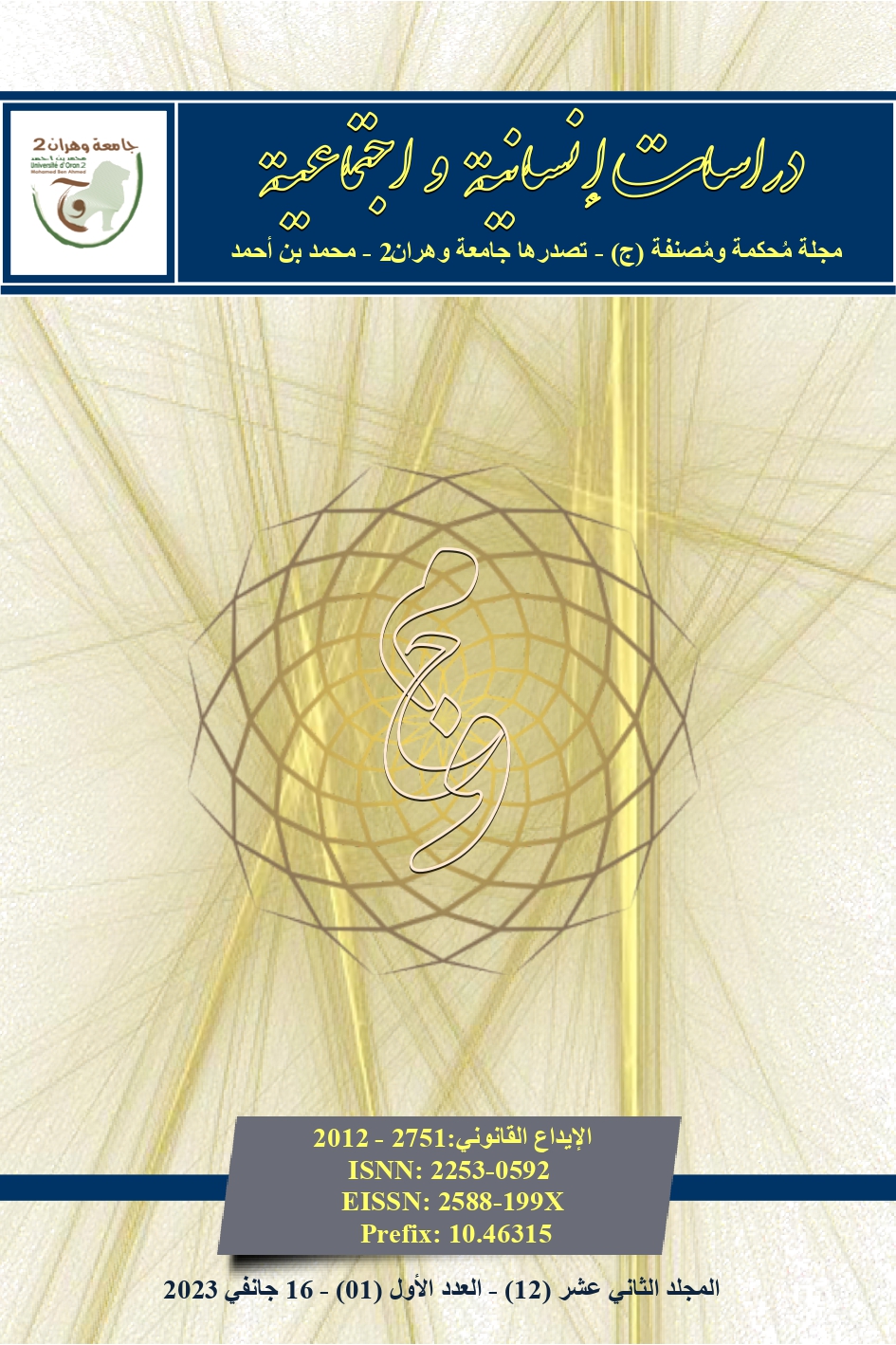
Main Article Content
Abstract
Theorical approach of metacognition differed; the most important distinguish between metacognitive knowledge and self-regulation. This descriptive research aims to identify pupil’s knowledge about their self-regulation in a school field that mathematics. A scale composed of three dimensions of metacognition, attention guidance, and regulation was used. It was passed to (62) secondary school pupils. The results confirmed that pupils have the most knowledge of metacognitive regulation, followed by that’s about metacognitive attention. Knowledge of metacognitive guidance remains the least acquired despite its importance in monitoring cognitive activity. The acquired knowledge explains the pupils’ difficulties, as a source for the latter, because it is not always objective and correct.
Article Details

Copyright Notice
Authors retain copyright and grant the journal right of first publication with the work simultaneously licensed under a Creative Commons Attribution 4.0 International License (CC BY 4.0).
This allows others to share the work with an acknowledgement of the work's authorship and initial publication in this journal[cite: 2, 11].
The journal allows authors to deposit the Version of Record (published version) in an institutional or other repository of their choice without any embargo period.




References
2. معطي، منوبية (2017) دور الدافعية والمعرفية في حل مشكل في الرياضيات: دراسة ميدانية مع عينة من تلاميذ السنة الرابعة متوسط. أطروحة دكتوراه علوم في علم النفس العمل والتنظيم، جامعة الجزائر 2.
3. Alaoui, A.(1998). Métacognition et construction de la connaissance chez les élèves en difficulté d’apprentissage, Thèse de doctorat (PHD). Faculté des sciences de l’éducation, Université de Laval : Canada
4. Bautier-Castaing, E., & Robert, A.(1988). Réflexions sur le rôle des représentations métacognitives dans l’apprentissage des mathématiques. Revue française de pédagogie, Volume 84, p13-20.
5. Berardi- Coletta, B., Buyer, L. S., Dominowski, R. L., & Rellinger, E. R. (1995). Metacognition and problem solving: Aprocess- oriented approach. Journal of experimental psychology: Learning, Memory and Cognition, 21(1), p205-223.
6. Bouffard- Bouchard, T. (1992). Relation entre le savoir stratégique, l’évaluation de soi et le sentiment d’auto efficacité, et leur influence dans une tache de lecture. Enfance, tome 46, N0 1-2, p63-78.
7. Bouffard- Bouchard, T., Parent, S., & Larivée, S. (1993). Self-regulation on a concept-formation task among average and gifted students, Journal of experimental child psychology, Volume 56 (1), p115-134.
8. Brown, A. L. (1987). Metacognition, Executive control, Self-regulation and other more mysterious mechanism. In F.E Weinert., R.H Kluwe (Ed.), Metacognition Motivation and understanding, p144-181, London: Hillsdale, N.J: Lawrence Erlbraum Associates.
9. Chartier, D., & Lautrey, J.(1992). Peut-on apprendre à connaitre et à contrôler son propre fonctionnement cognitif, L’orientation scolaire et professionnelle, 21(1), p27-46.
10. Flavell, J.H. (1987) Speculation about the nature and development of metacognition. In F.E Weinert., R.H Kluwe (Ed.), Metacognition, Motivation and understanding, p1-29, London: Hillsdale, N.J: Lawrence Erlbraum Associates.
11. Flavell, J. H. (1985). Développement métacognitif. In J. Bideaud, M. Richelle (Ed.), Psychologie développementale : Problèmes et réalités, p 29-41, Mardaga : Bruxelles.
12. Lafortune, L. (1998). Une approche métacognitive-constructiviste en mathématiques. In L Lafortune, P Mangeau, R Pallascio (Ed.) Métacognition et compétences réflexives, p313-331, Canada : Les Editions Logiques
13. Lafortune, L., & St Pierre, L. (1994). La pensée et les émotions en mathématiques, métacognition et affectivité. Montréal : Les Editions Logiques.
14. Mangeau, P., Lafortune, L., Pallascio, R., & Allaire, R. (1998). Indice et structure de l’autorégulation métacognitive. In L Lafortune., P Mangeau., R Pallascio (Ed.), Métacognition et compétences réflexives, p245-260. Canada : Les Editions Logiques.
15. OCDE(2016) . Résultats du PISA 2015 (volume1) : L’excellence et l’équité dans l’éducation, PISA, Paris : Edition OCDE, http://dx.doi.org/10.1787/9789264267534-fr:
16. Pinard, A.(1992). Métaconscience et métacognition, Psychologie canadienne, 33(1), p27-41
17. Pintrich, P. R., & De Groot, E. (1990). Motivation and self-regulated learning components of classroom academic performance. Journal of Educational Psychology, 82 (1) p33-40.
18. Portelance, L.(1998). Enseigner en vue de développer la compétence métacognitive : Comment et pourquoi ? In L. Lafortune ., P. Mangeau., R Pallascio (Ed.), Métacognition et compétences réflexives, p47-65. Canada : Les Editions Logiques.
19. Rogers, X. (2003). Des situations pour intégrer les acquis scolaires. Bruxelles : De Boeck.
20. Shoenfeld, A. H. (1982). Some thoughts on problem-solving research and mathematics education. In F. K. Lester (Ed.) Mathematical problem solving, p27-37. Issues in research. The Franklin Institute Press.
21. St Pierre, L. (1997). L’étude personnelle en mathématiques au collège. Thèse de doctorat (PHD). Faculté des sciences de l’éducation. Université de Montréal.
22. Swanson, H. I. (1990). Influence of metacognitive knowledge and aptitude on problem solving. Journal of Educational Psychology, Vol 82 (2), p306-314.
32-Zimmerman, B.J. (1995). Self- regulation involves more than metacognition: A social cognitive perspective. Educational Psychologist, 30(4), p217-221